A Reflection on Change

Waters of March

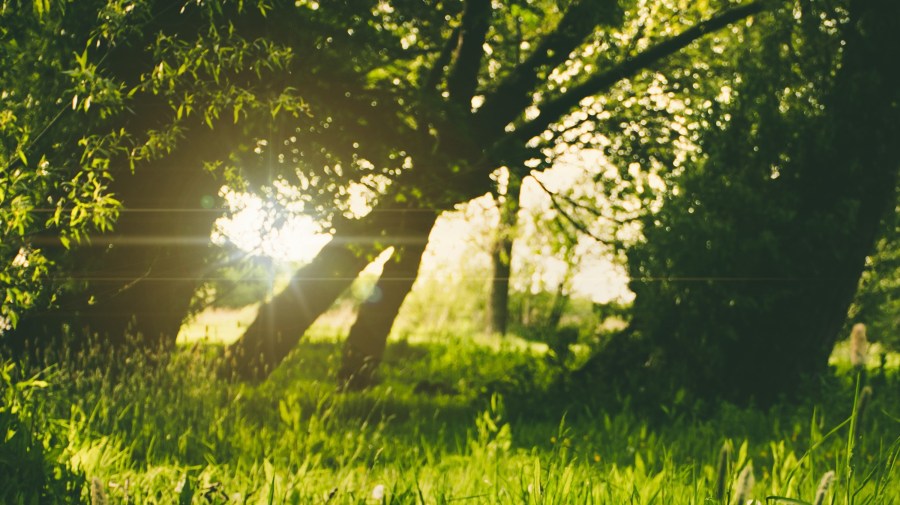
it’s the sticks, it’s the stones,
it’s the stubbing of toes, it’s the breaking of bones,
it’s the stopping to sit at the edge of a stump,
it’s the feelings that creep when we think we’re along;
it’s a fox in the brush, it’s a breach in the branches:
it’s a lush beam of sun, it’s a box full of matches;
it’s the crack of a shell, it’s the stretch of a wing,
it’s the hatchling who fell,
it’s his siblings who sing;
it’s a spark, it’s the smoke,
it’s a flame, it’s the hearth,
it’s a warmth at the belly, it’s the hurt
at the heart; it’s an oak when it blooms,
it’s the knots on its bark, it’s a hope
for a home, it’s a ridge that’s been marked:
it’s a way to the water, it’s a river that bends;
it’s as soft as a grin when the breeze hits your back,
it’s a trust in those winds & the paths they may wend;
it’s heard first as a hush & when it shouts from thin air,
it’s when prudence just shrugs, & when faith nears the bend—

It’s life unabashed—
finding joy in amends.

In Her Light

In Her Light

I remember you there;
my first memory of dusk:
you were watching grandpa
race me to the pond,
my steady-lacked legs 
like sapling roots—you 
were laughing with the old man
when they bent & buckled 
my tiny body towards the mud
& when I cried, you nodded
when my grandpa had said:
son, don't sob—stand up 
because you can't grow
old so scared to move. 

I remember you there
when I stripped down 
bare on the pier in dim light 
& jumped down into the lake 
near your reflection in the water.
It must’ve been surreal to see
that same sapling-legged boy
now grown—exposed. 
Did you know those 
oak log legs had a shake?
Did you see them quiver? Me,
scared to show my body, skinny
dipping for the first time
in the company of girls.

I remember you there
before I could remember—
my mom had once pulled out a shoebox 
filled with her childhood hopes & dreams.
She had found a portrait of yours
she had stuffed in the back, one she 
had painted as a sophomore, she said
you were gorgeous that night, you shone
your light on her belly filled with me;
she smiles when she says you were the brightest
she can remember you’d have ever been,
bright enough to paint your figure in the dusk, 
bright enough to wake me up,
to keep her company—
each kick like another
stroke of her brush.

Finding a Little Peace

A recent conversation with a co-worker has got me a bit reflective, a bit melancholic. The topic centered around the news that he and his wife had started couple’s therapy. Don’t worry, I think they’re okay—it’s to strengthen their relationship not (as I might’ve assumed) salvage it—so, fortunate for my cubemate, a troubled marriage is not what’s got me all sad and bothered. Rather, it’s a question he mentioned, one his therapist posed: What is peace to you? and, more than that, it’s the answer he gave: the little moments in my day-to-day.

In the context of casual conversation, his answer had blindsided me—my mind went manic. I was now deeply engaged, finding myself unintentionally playing therapist as I probed away with questions like what do you mean by that and how does that feel. Though, I must admit, as much as I’d like to consider myself a well-intentioned listener, my over-asking was not intended to be therapy—at least not for him; it was an internal inquisition; it was me trying to connect with this feeling I’ve had for a while, a quasi-thought at the tip of my tongue that I kept failing to put to words or, more honestly put, communicate to another person without feeling batshit-insane. 

With a simple question and answer, our casual conversation had turned to self-revelation: as he spoke, his words had helped me in finding my own. What he had summated so simply as peace, I could once only describe verbosely through poem: those little moments when you catch yourself in a daze, staring at a treetop as it sways with the wind; or when you tilt your face towards the sunlight, its warmth like a hearth for the soul. I’ve found these moments, though infinitely varied, are consistently rooted deep to one constant: nature, taking the time to surround yourself in the lives of those who speak only through silence. And what better way to describe this experience than just as he did: as little moments of peace? Because, at the heart of it, that’s exactly what they are. 

So one would think that finally finding the words that had eluded me for so long would, much like what they’re meant to describe, have brought me a little peace. They didn’t. In some dramatically ironic way, by putting peace to word, I was more stressed and more concerned. This new understanding of peace had led to angst-filled reflection. I was now hyper-cognizant of the unfortunate fact that, with each passing year, as I plunge deeper and deeper into the depths of adulthood, these types of moments have appeared less and less frequent and, maybe worse yet, less potent. But why was that? Why had peace distanced and dulled itself from me over time? Was it something I did? The throat-swelling answer is yes; it was something I did and continue to do to myself. The source of my failing serenity had been made clear: my own self-absorption.

* * *

How can I number the worlds to which the eye gives me entry?— the world of light, of colour, of shape, of shadow: of mathematical precision in the snowflake, the ice formation, the quartz crystal, the patterns of stamen and petal: of rhythm in the fluid curve and plunging line of the mountain faces. Why some blocks of stone, hacked into violent and tortured shapes, should so profoundly tranquilise the mind I do not know. Perhaps the eye imposes its own rhythm on what is only a confusion: one has to look creatively to see this mass of rock as more than jag and pinnacle—as beauty. Else why did men for so many centuries think mountains repulsive? A certain kind of consciousness interacts with the mountain-forms to create this sense of beauty. Yet the forms must be there for the eye to see. And forms of a certain distinction: mere dollops won’t do it. It is, as with all creation, matter impregnated with mind: but the resultant issue is a living spirit, a glow in the consciousness, that perishes when the glow is dead. It is something snatched from non-being, that shadow which creeps in on us continuously and can be held off by continuous creative act. So, simply to look on anything, such as a mountain, with the love that penetrates to its essence, is to widen the domain of being in the vastness of non-being. Man has no other reason for his existence.

Nan Shepherd, The Living Mountain

* * *

Stress is insidious. Like an infestation, it multiplies behind the scenes, quiet to the point that you’ll never notice how much damage it’s done until it’s become too big to compartmentalize and, trying to relax after a long day, you happen to catch a pest scurry across your living room. You come to Jesus, fully knowing you can’t keep brushing off the problem; the evidence of something more serious now sits in plain view. By recognizing the growing decline of my little moments of peace, it’s as if I had caught a glimpse of said pest crawling out from below. I could no longer relax. The knowledge of a hidden swarm growing in my crawl space now consumed my headspace.

But how did this stress happen? Where did it start? I’ve come to a thought: what is stress but selfishness? My problems at front and center of my world. I think this mindset has crept up on me with age. The older I get, the more my responsibilities grow, and their stresses follow. I now have a job, car, house, dog, partner, and much more, all things I love dearly, yet I’ve probably spent more time worrying about these things than I’ve derived any joy from them. By allowing the joy and excitement of each new chapter of life, each new responsibility, to be overtaken by the worries they’re akin to—ones who’ve grown each year unacknowledged and thus unresolved—these stressors have amalgamated over time, shaping themselves into a box with me insulated at its center. I’m in it alone, the boxed-in walls blocking me from view of any world outside my own. In self-created solitude, I’m left only to self-absorb.

By boxing us in, the selfishness of stress stunts the essence of what makes us most human: empathy, awareness, wonder. It just so happens that those same essence-defining characteristics are the ones found at play behind the peace I’ve been trying to describe: a wonder-filled awareness of the life around you, a moment of pure empathy for the trees, the flowers, the birds, or any other living thing that may cross your gaze. Though I’ve found, as I break down my walls of stress and self-obsession, that our capacity to empathize-for goes beyond just the living. Selfless peace can bring us towards an empathy for the lives of things not normally thought to have possessed life in the first place; an all-encompassing empathy can bring us to that little moment of peace, that little moment of wonder for the vast life behind something as grandiose as a mountain—or something as minute as a rock. And through that peace, that deep sense of connection, we raise the inanimate to life like, Nan Shepherd had put, matter impregnated with mind

So, in the hopes of coaxing my little moments of peace back out, I’ve decided to make a more active effort to notice myself less and the life around me more. As if by making the world that surrounds me a bit more lively, I’ll make my own a bit more peaceful. My first step: a poem in appreciation.

And yes, this little rant was in fact just a plug for a poem I wrote:

A Little Peace

Toward the treetops
I watch the way
a breeze breathes rhythm
like life into the leaves
who dance & sing—
still hung up on their father
for their youth, in early august
autumn seems so far—
& away they sing 
& dance & dream & 
(I) see them show the inner
lives (of all such little things)
too often go unsung—& still

their golden hour waits, bathes
her sun behind the branches
brings light & leaves
a silhouette—
those treetops turned
to shadowed shapes:
gray inkblots traced 
green by the grass—
like nature had come  
to paint the proof:
her consciousness
clear as color, 
her canvas now
carved in memory—

a soft hand
a warm breeze
a hallowed dance
a building beat
a man now—
unabashed— 
sheds light to see
(the lives within)
such little things.

The Time Traveling Cowboy

I’ve been struggling with confidence issues​ but not in the way that struggle and confidence so often connote when sharing a sentence​: that (hopefully) relatable “so when are we gonna burn off this college weight” mumbling to a foggy, post-shower, finger-smudged apparition of oneself in a mirror kind of way. No, while I’ve suffered such an affliction, my current is a bit less superficial and thus a bit more difficult to illustrate than a simple, aesthetic-obsessed annoyance. It’s less brash, but more stress-inducing; it’s less blunt,​ but more consistent: a chronic bubbling of thoughts swaying back-and-forth from conscious to subconscious, never blooming into full-blown anxiety ​but, all the more, never subsiding enough for me to claim, in confidence,​ a peaceful state of mind. ​If I had to put a name to this plague of prickling thought: it’s an identity crisis. ​But, through reflection, I’d like to believe I’ve dissected and refined this crisis into something less vague and cliché than a word as achingly overused as existential.

I must concede that this crisis does seem to stem from a fundamental, nature-of-existence-focused and thus, yes, by definition existential question. And that question, at the risk of sounding like the white-dreaded-drug-rug-kid who shows up to Intro to Philosophy twenty minutes late only to steer socratic seminar towards the deconstruction of truth and reality in the context of 9/11, that pseudo-deep-if-taken-at-face-value question is: who am I?

My first memory of self, or rather my first attempt to construct said memory through the secondhand accounts of my family’s recollections, is when, by their account mind you, I gave myself the title The Whipped Cream Cowboy. Cladding myself in nothing but cowboy boots, a ten-gallon hat and Toy Story undies, I ran around the house shouting my newly found identity to anyone who could bear a toddler’s rambling excitement. At the time I, to no surprise, loved whipped cream and cowboy movies, so it would only follow that I’d define myself, and thus my idealized future self, by exactly those two things: I would one day run a ranch, riding horses and devouring as much whipped cream as my belly could fit. In that future, I’m my own man or, better yet, my own cowboy and, as my own cowboy, my mom would no longer hold power over me and thus would now be helpless in her ever-persistent attempts to stifle my conquest of consuming copious amounts of cream. But even if my mother were to try and stop me, my young imagination had conjured a backup plan: I’d escape on horseback, leaving her in a dust of empty aerosol cans with bags of that whipped stuff hanging from my saddle.

A few years later, around the age of six or seven, my cowboy aspirations faded fast when I began assisting my adoptive grandfather, a shepherd and thus a kind of cowboy in his own right, on his farm. Tending to sheep was gross, grueling, and my miniature-self could only imagine the work would be substantially worse if I were to take on the then-unfathomable responsibility of owning my own ranch. And, with the soul crushing smack of reality the hand of hard work so often provides, my toddler-dreamed cowboy had died. But I spent little time mourning for the cowboy, as a new dream would soon emerge; each day after helping my grandfather, I’d go inside his house and play with the thousands of lego pieces he and my grandma had bought; I built countless structures, skyscrapers and, for whatever reason, became fixated with measuring each one of them with a worn-out ruler I had found in the barn. It was clear to me then, in those moments of what my boyhood sense of wonder would perceive as an endless supply of legos at hand for my precise, ruler-measured constructions, that I would become an architect or engineer or construction worker of some sort; I believed then, without a doubt, that I was destined to become the next bigger better Bob the Builder.

But on an unassuming evening, over a year after the budding of my building dreams, I was lounging around with my mom, watching MTV when, if memory serves, I became deeply mesmerized by a myriad of Tim McGraw and Mariah Carey music videos that, given my looming bedtime, served as lullabies and drifted my overactive child mind to a place of serene stillness. This lucid bedtime journey I was taken on by McGraw and Mimi, both of whom I remain unabashedly enamored with to this day, coupled with the countless evenings I spent eating dinner with my grandma from an American-Idol-purposed television tray, quickly pushed my construction dreams to the wayside; I knew then and there that my true passion, where I would truly derive the most pleasure in life from, was not in architecture or an engineer’s monotonous process of planning to precision, it was to be a performer, a singer! I wanted to make people feel what that night of MTV had made me feel and so I, ready to burst from the thrill of my new found calling, asked my mother to record me singing a song my child hands had spent the whole week writing on the back of a scrapped math assignment. But, when she played it back to me, I immediately broke down and bawled because my voice sounded nothing like I had thought it did. My mom always laughs when she recalls my devastation: I wailed “I’ll never be the next Tim McGraw!” before running to my room, slamming the door, and crying myself to sleep face down into my Pikachu pillow. Thankfully the trauma soon subsided when, on the next day, I cracked a few jokes that resonated with Mrs. Craig’s Second Grade Class (sans Mrs. Craig, she sent me out to the hall for being too disruptive at reading time). And, from that moment on, all my elementary school friends encouraged me to be a comedian. This became the new goal and it mostly stuck with me, up until adolescence at least.

In high school, if I had reflected on all my past dreams, I would’ve scoffed at just how silly they were. I would’ve pawned them off as youthful naivety because now, as a high school senior, I knew just who I was and who I would continue to be: an atheist intellectual destined for some arbitrary academic position. Since I had reached physical maturity, as my logic would follow, then I must also have reached emotional maturity and must, undoubtedly, know myself completely. If high school me sounds like an overconfident jackass to you, it’s because he undoubtedly was.

Now, out of college and working my first career, which is far from academia, there’s a bit of distance between who I am now and who I was in high school and, from that distance, I can’t help but cringe at my high school self. I cringe at his cocky, unfounded confidence, all the while current me, ironically, is searching for a similar confidence once again (albeit without the asshole attitude). But while current me and high school me do differ greatly as far as confidence goes, what’s changed most about us is our empathy and general perspective: if The Whipped Cream Cowboy could travel time and speak with all the future iterations of himself, the ass that is high school me would criticize the little cowboy’s hopes and dreams, he would brush them off as unrealistic, childhood fantasies. While current me, current me couldn’t help but to encourage, to empathize with the cowboy; are my current dreams not just as silly and arbitrary as his?

I get the sense that in periods of transition, like going from school to career, we often feel as if we’re floating. We’re floating in that transition, trying to hold on to something, and with that float comes an anxiety, an underlying sense of urgency to move forward, yet we don’t know where to. We don’t know because we’ve become so obsessed in making sure each step we take forward is a step towards our ideal future and any step less than that is one not have worth taking in the first place. This fear that we must always make the right move turns our float into a stasis; if we keep questioning whether something is the right move, we’re unlikely to progress, because it’s more likely that we’ll never find that impossibly elusive right move. This is the irony; our dreams, our ideal-selves, our long term goals, they’re not static perceptions destined to stick within our psyche for a lifetime. From cowboy to comedian, or architect to academic, our idea of self changes constantly, no matter how confident we may be in its permanence at the time, and with each step forward, with each new experience, our identity shifts and shapes itself into something new—sometimes drastically so.

So, when moving forward, maybe the best plan is no plan. Instead of obsessing over whether each step taken is the right one, the one that will bring us to where we’d like to be, maybe we should find comfort in the fact that our identity and dreams are in an inevitable, perpetual shift and, by confronting the metamorphic nature of self, we may come to conclude that though a particular step may not lead us to where our current self would like to be, it could, just as likely, take us somewhere even more exciting—a place we had never thought to imagine: a place our future self would enjoy all the same, or maybe more.